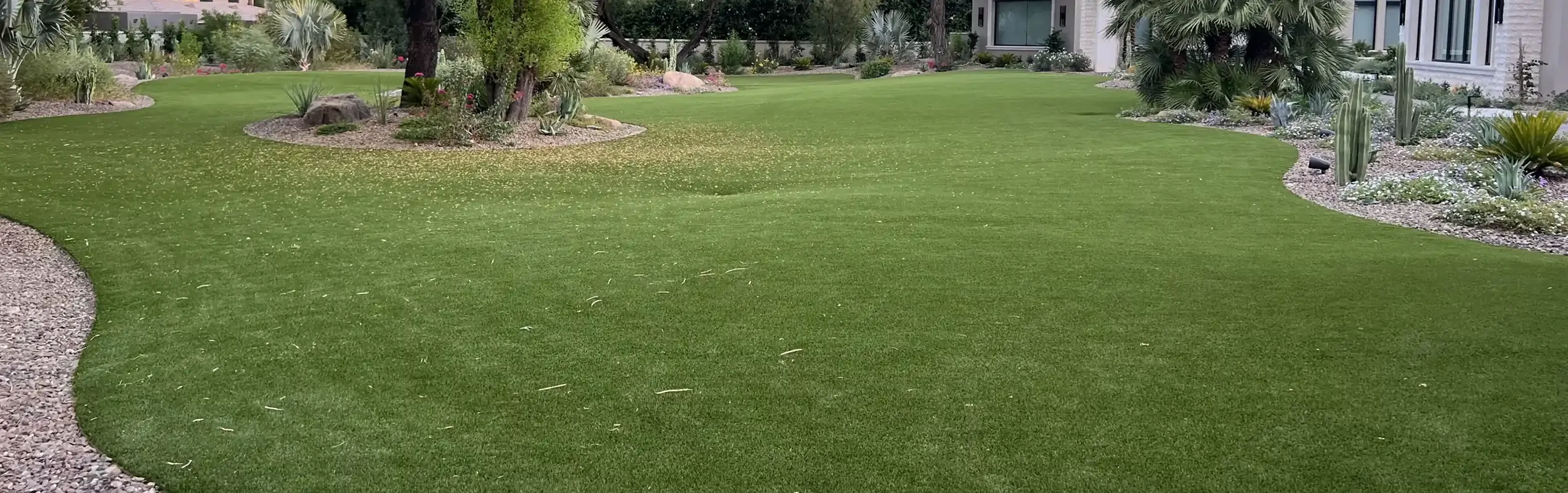
The single most important variable in artificial turf performance over time is not the turf face fiber, the infill brand, or the pile height. It is the base. A well-built base on a heavy-clay sub-grade drains within hours of a Gulf Coast rain event, maintains its compaction under years of traffic, and holds edge and seam stability through the seasonal moisture cycling that stresses anchoring systems across the Tomball corridor. A poorly built base produces a turf surface that pools, develops soft spots in wet seasons, lifts at the edges when clay sub-grade contracts in August, and becomes progressively less functional with each additional year. This reality is especially significant in the NW Houston ranch and residential market. Harris County and Montgomery County sit on some of the heaviest-clay soils in the Greater Houston metropolitan area—clay profiles that hold water for days after major rain events, expand when wet and contract when dry, and behave structurally in ways that sandy-loam or loam sub-grades do not. Every drainage and base preparation scope from Artificial Turf of Tomball begins with the soil character at that specific property, because the clay profile at a Hockley ranch property on the Waller County edge differs from the clay at a Spring subdivision lot, and both differ from the piney-woods sandy-loam transition near Conroe. We confirm sub-grade character at the installation zone before specifying base depth, aggregate type, and drainage routing. That confirmation—done by hand and eye at the site, not by regional soil map assumption—is what allows us to specify a base that actually performs in the conditions it will face. Drainage routing is the other half of the base equation. A base built to excellent compaction standards will still fail if water cannot exit the turf zone within a reasonable time after rain. We identify the natural drainage outlet for every installation—whether that is a lot-edge swale, an engineered storm drainage connection, a natural low point on acreage land, or a designed outlet through a ranch-property perimeter fence—and route the base drainage to move water toward it.