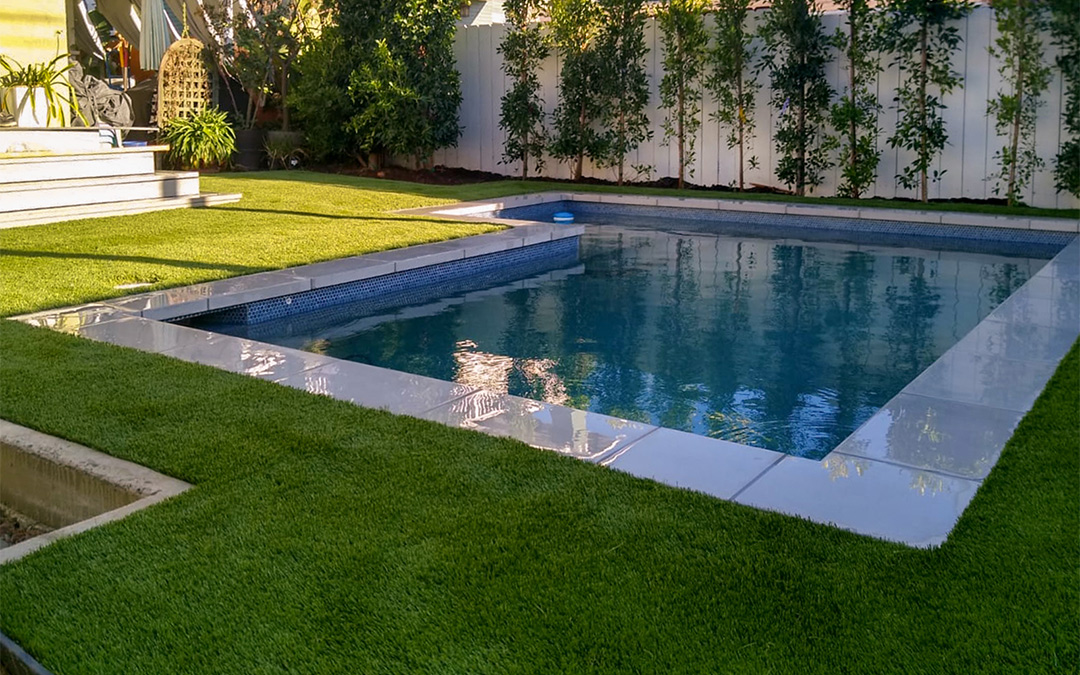
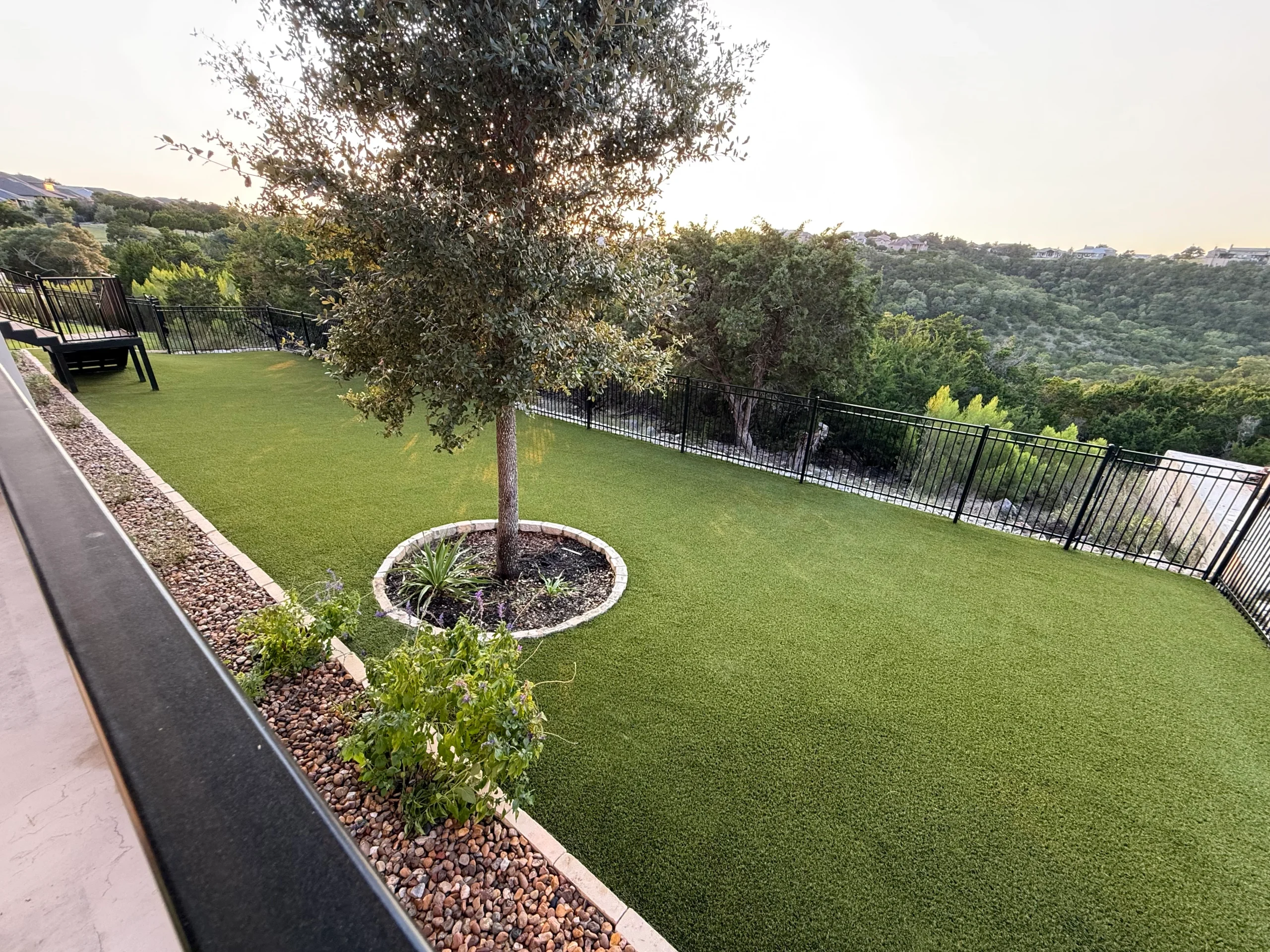
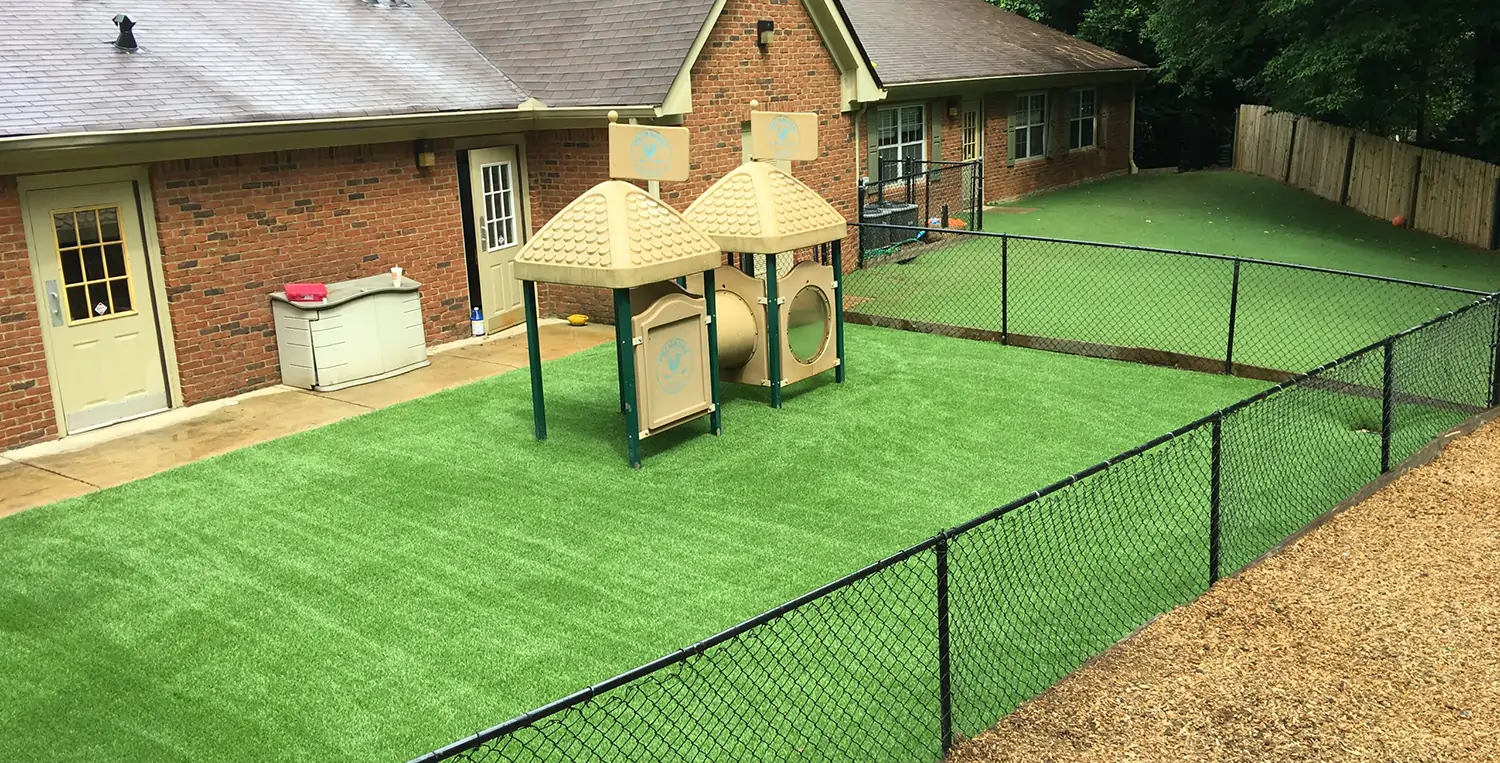
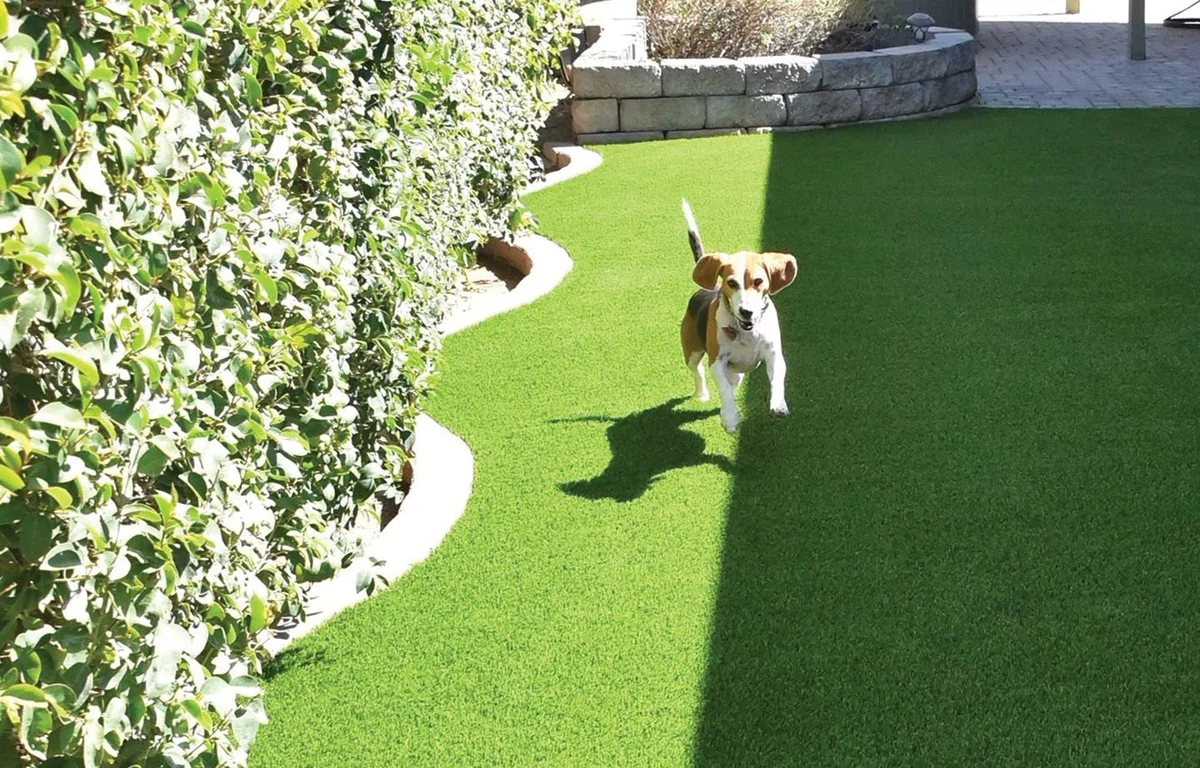
Residential turf installation across the Tomball service area means dealing with a wider range of property conditions than most markets. The NW Houston corridor runs from dense suburban neighborhoods in Klein and Willowbrook—where standard lot sizes and established hardscape drainage define the scope—through the larger acreage sections of Spring's western ranch edge, Magnolia's Westwood and Decker Prairie corridors, and into the far-ranch residential of Hockley where caliche roads, well-and-septic, and no municipal irrigation infrastructure are the standard. Artificial Turf of Tomball builds residential turf scopes from the property's actual conditions rather than from a standard suburban template. For homeowners in Wildwood, the ranch-acreage corridors near Tomball Lake, or the Hockley Ranch community sections, that means sub-grade clay-loam profiling, septic setback confirmation before any excavation, caliche and gravel edge transitions, and drainage routed to natural lot-edge low points rather than storm sewer infrastructure that does not exist. For homeowners in Klein's established residential sections or in The Woodlands HOA communities, that means root zone assessment under mature oak canopy, precision patio and pool-deck edge transitions, and drainage planned relative to the existing concrete infrastructure that defines water movement on those lots. The fundamental problem residential turf solves in this market is consistent: natural grass struggles. It struggles under the heavy shade of mature East Texas oaks. It struggles in the high-pet-traffic zones near back gates and dog runs. It struggles on the heavy clay that dominates most of Harris and Montgomery County, turning to muddy bare patches after every significant rain and cracking and browning in August heat. Turf eliminates those problems with a surface that is stable year-round, requires no irrigation, handles pet and family traffic without bare-patch deterioration, and looks consistent through both the wet season and the dry.